Sunday, October 28, 2012

Rock Climbing, Maybe?

Rock Climbing was not a hobby that I expected to get into.  In fact, my interest in climbing stony, spiky walls only sprung after a friend forced me to give it a try at the Earth Trek Climbing Center in Rockville.

I first decided to start out small, at the junior level, with no harness/rope. The walls and courses were short yet still complex ranging from big grip stones to small ones that were further apart.  Mats also provided an extra support in case of fall.  The center does a great job at suiting to your level and interests, with Rock Climbing Instructors helping you along the way.

The point is, a self-paced sport is something I have been looking for forever.  This way, withing a few points I can progress to being in spotted rock climbing settings, and start my way up to higher heights.  I'd also love to extend my interest to outdoors climbing expeditions.  Some possible settings include Sugarloaf Mountain or perhaps Garrett County in Western Maryland.  We'll see! An adventure of possibilities awaits.
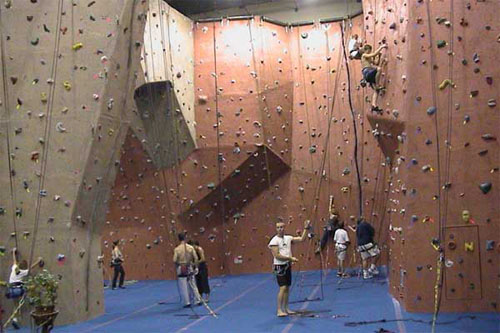
A fun place to start and learn!
Where I hope to be (A boulder near Deep Creek Lake)


Sunday, October 21, 2012

Career Thoughts: Neonatal and Perinatal Medicine

Dr. Karev of Grey's Anatomy carefully
monitoring an incubated neonatal
My recent obsession with the show Grey's Anatomy has sparked an interest in me for a possible future in Medicine. However lofty this seems, an episode I saw just yesterday really made me curious about the medicine of Neonatals (Newborns), particularly in Intensive Care Units. The delicate care that Newborns undergo (especially when at risk) was fascinating, especially for pre-mature ones. In the episodes "Dark was the Night" and "Suddenly," Doctors Karev and Grey care for a premature neonatal who experiences and ambulance crash on the a journey to the hospital. The emergency care and sacrifice that goes into saving babies was not only heroic but also scientifically and emotionally stimulating.  From incubating the infant, to providing ventilation, fluids, and all core life supports seemed like an inspiring task.
            My research in this field was further driven after watching the episode. I found out that Neonatologists require three years of pediatric residency and additional three years of fellowship. And yes, I am aware that Grey's Anatomy is a dramatized account of medicine, but it still gave me some exposure to a career I think would be interesting.

For a REAL LIFE account of Neonatology, here is an informative video that I found:


Some things I learned from the video:

  1. Caring for Neonatal patients is a team effort of nurses, physicians, and parents
  2. Emergency situations are common and often times, newborns at high-risk are transported my helicopter
  3. A Pediatric Residency must precede Neonatology Training
  4. Newborns can have a range of problems as a result of the pregnancy, or in the delivery.  While congenital abnormalities, lung problems, and infections are common, one disorder that interests me the most is hypoglycemia (low-blood sugar) in infants.

Saturday, September 29, 2012

Scriptwriter's Reflection


Our script writing is progressing fluidly, with a number of ideas for implementing the dystopian elements.  The first Dystopian elements include the character's dissatisfaction of the society, a worshiped concept, and a dehumanized population.  These three facets, which set the stage of the story are introduced first during scene 1.  Voice-overs of the leader, explaining the greatness of computerized learning, as well as the complete absorption and brainwashing of the computer-drones portray the setting.
Our dystopian trailer focuses on a society's to dumb down students
through computerized learning, while books are hidden.  One girl,
strives to read these books and learn what has been kept from the
general population.
            The script transitions to the second scene with the catalysts.  The script specifies a close-up camera angle and voice-over, of Ruth (the protagonist), leaving the computer lab (setting of scene 1), and adventuring out into the unknown woods.  Her transition to scene 2 (taking place in the woods) represents the fear of the unknown, another dystopian element.  The catalyst for change, the most critical part, occurs at this point.  Ruth finds a textbook from the 21st century, and realizes that the current educational practices limit student knowledge.  She rushes home to read the book, and inquire about the past, and how much there is to learn; however, on her way back to school the next day (scene 3) she is halted and interrogated by Computer Police.  The police throw her book into the camera, and the trailer ends.              
             Voice-overs are the primary medium in communicating the thoughts of characters.  The script is specfic about camera speeds and alternating between shots of the computer and students, or close-ups and wide shots of the the police and Ruth.  Furthermore, the storyline is sequential as the movie would be, if made.  The three definite scenes portray the beginning, middle, and exposition to the end.  The throwing of the book will serve as a cliffhanger.  Is the story resolved, with Ruth getting to keep her book, or do the Police demolish the book, ruining a chance for a change?  This is the question the trailer will raise.                


Sunday, September 23, 2012

5x5 Video Challenge


Clips
1. Entering the park down concrete steps
2. Walking on a wall of concrete bricks
3. Swinging
4. Monkey Bars
5. Down the Slide

I shot my 5x5 Video during a short visit to my Neighbhorhood Park, using the camera application of the iPad  2.  I carefully edited the clips using Windows Live Movie Maker, which I already had on my computer.  This software allowed me to zoom into each clip, in order to precisely cut the lengths to five seconds each.  The split function was easy to navigate and use, yet the absence of a timeline made a bit difficult to keep track of the exact seconds.

Overall, I am pleased with my the product of my 5x5 video.  My piece shows something I used to loved doing as kid (going to the park).  The movement of my camera as I walked on the pavemet or swung on the swingset, adds a nice effect.

For the next video challenge, I would like to incorporate people and medium closeups shots of their emotions.  The goal of the project would be to incorporate skills of closeups and focusing, in order to portray a common emotion among the participants in the video.  Music should be another requirement so as to complement the video.

Dystopian Trailer Critique

Blindness. Fernando Meirelles. R. 2008.
When an epidemic of blindness forces the the citizens of a town into an asylum, a group of individuals struggle to escape the chaos of rape, filth, and war, and rebuild their lives as a makeshift family in the empty remains of their city.


       Through the use of dialogue, editing, and style, the trailer emotionally captures how the Doctor's wife ( the protagonist) strives to protect her loved ones in the midst of post-apocalyptic control.  The trailer starts with the decay of a city's society, due to a mass epidemic of blindness.  The chaos of the initial situation is relayed through honks of cars and sirens, blurred background images symbolizing disturbance or hazy vision, and a creepy echo that stands for the announcement of the city's mass chaos.  The establishment of the protagonist is done through her brief dialogues with characters such as officers, internees, and her husband.  In one instance, she says, "I won't forget your face."  This quote establishes her prominence dramatically, as she is the only one who can see faces, and therefore, has the potential and goal to free herself and loved ones.  The protagonist's intense motive to escape the premise of post-apocalyptic chaos is shown through the imbalance of slow to fast-paced music and sequences.  As the trailer speeds to a turbulent blow at the end, the audience can understand Doctor's Wife's struggle and perseverance to escape the horror of a blind asylum.
     
        For my group's trailer, I plan to include camera work such as blurring/going out of focus, and including chaotic sounds to portray the setting.  I will edit clips with intense speed and then slow them down towards the credits, in order to give the audience a lasting effect.


Thursday, September 13, 2012

Passionate and Personalized Learning: My Thoughts

          The article, Preparing Students to Learn Without Us explains how children are perfectly are capabale of desinging their own course of lesson planning through individualized learning. Core content is expressed and applied through mediums of the child's interests such as listening, debating, reading a book. Secondly, the article highlights how students learn more in depth according to their passions. To do this, individual assignements can be given according to specific learning styles.
          An ideal example of providing personalized learning in a still, monitored enviornment is in the following quote: "Using Google Docs, students continually update their progress, and she provides regular feedback. Students also give one another feedback on their plans as they go. Everyone follows a rubric that covers such areas as standards, learning outcomes, artifact explanation, blog posts, learning activities, work ethic, and research." In this way, students are not only voicing their own opinions and reflecting with each other, but the teacher can still keep up with the work while instiling values such as work ethic and research. However, the teacher's monitoring of the learning enviornment is just enough to allow the students to be FREE and learn on their OWN.
          So far, in our class, I have not seen a great deal of personalized learning. Hopefully, as the year progresses, we will get to indivdualize our learning through exploring our passions in film topics/genres, filming and editing technqiues, and how to write about film. I hope Mr. May doesn't give strict rubrics, but rather guidelines to follow in order to help us find out about what we like. The blogs will also facilitate this through peer reviewing.
          In terms of the class curriculum, I would like to learn about lighting and angle composition techniques for emphasizing mood and emotion in the overall story of a film. I would like to learn this by analyzing these  techniques in films and then applying observed skills into my/our own work.

Monday, September 10, 2012

Movie Review Assignment


Annotated Movie Review:


The movie review of "Precious" written by New York Times writer A.O. Scott highlights the powerfully painful emotions of the story and film itself.  The review starts off with a general synopsis of the characters' background, introducing there abusive and impoverished life in Harlem, New York.  The three aspects of film are woven in seamlessly, mentioning the acting or directing of key scenes and descriptions of the plot.  For instance, after mentioning the climax, in which "Precious," the antagonist, escapes her abusive mother's beatings, Scott talks about the acting and personal training of the actress her self.

Overall, the reviewer focuses on the movie's tone as the overall backdrop for his review.  His main mission is to tell the reader that the movie is not just about absuvie families or poverty, but about a complex journey through obstacles.  To relay this message, he uses key aspects from the plot and acting/directing of the story.  Cinematography is scarcely discussed.

For the movie reviews, the three elements of film (Literary, Dramatic, and Cinematographic) should be discussed.  However, liberty in organizing and integrating these elements should be given, so as to allow for a fluid-sounding piece.  Acting examples can alternate with story elements (such as describing how a character's actions in the plot were skillfully portrayed through personable acting.)  Elements of Cinematography should alternate with the director's vision and purpose for the film. Thus, the reviews will be natural-sounding and relate each of the elements with each other.